The entanglement game intention: in the folding/ unfolding/ enfolding of the zine, the movement of child figures, the twisting of string, the storying of lived experiences of former students through the current/ future ones, I think of Bradotti’s (2019) and Barad’s (2007) works on the relational dynamic production of new knowledges/materializations that takes place in the re/working of specification and actualization, of past and virtual futures.
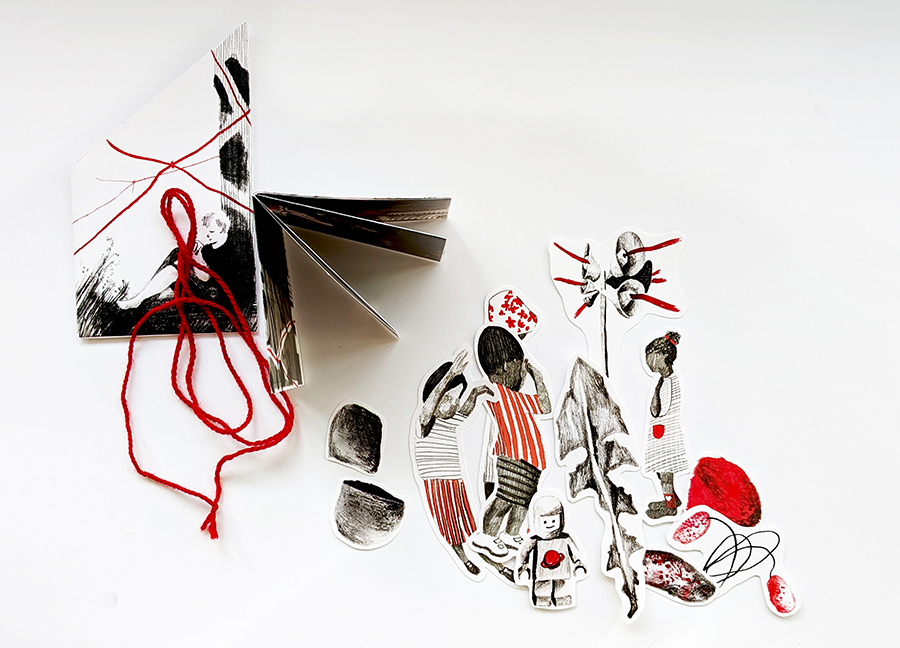
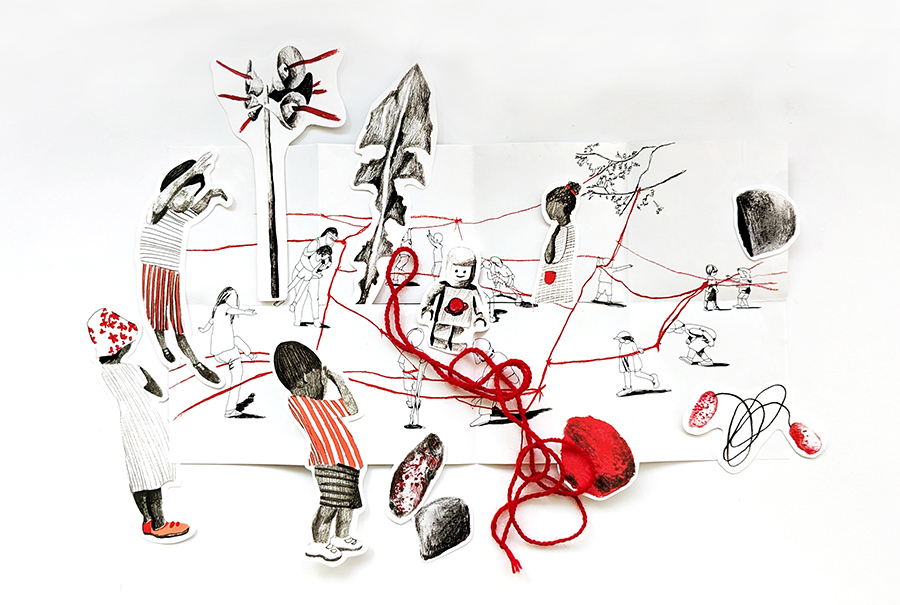
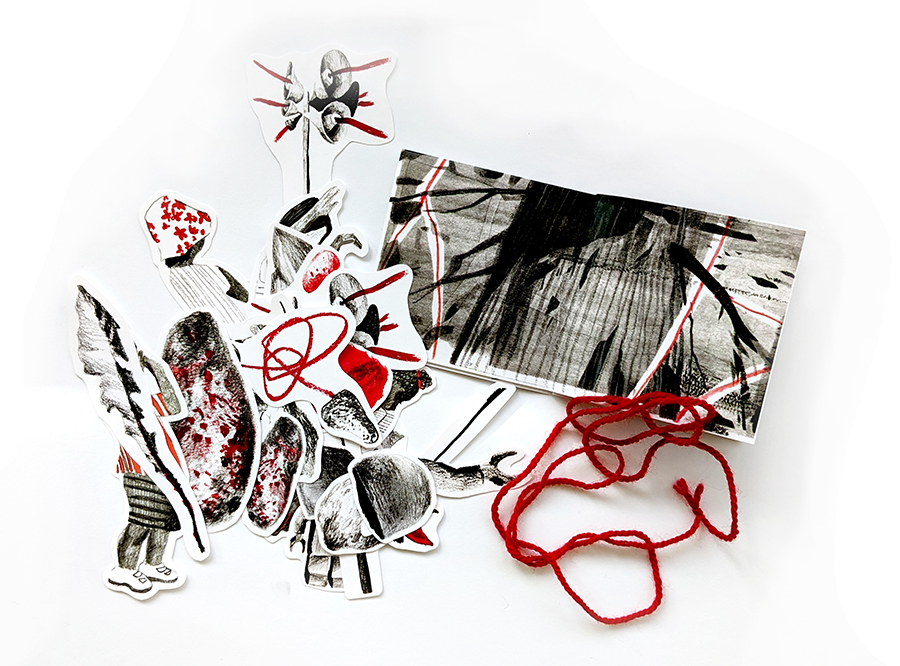
Game elements:
- an envelope
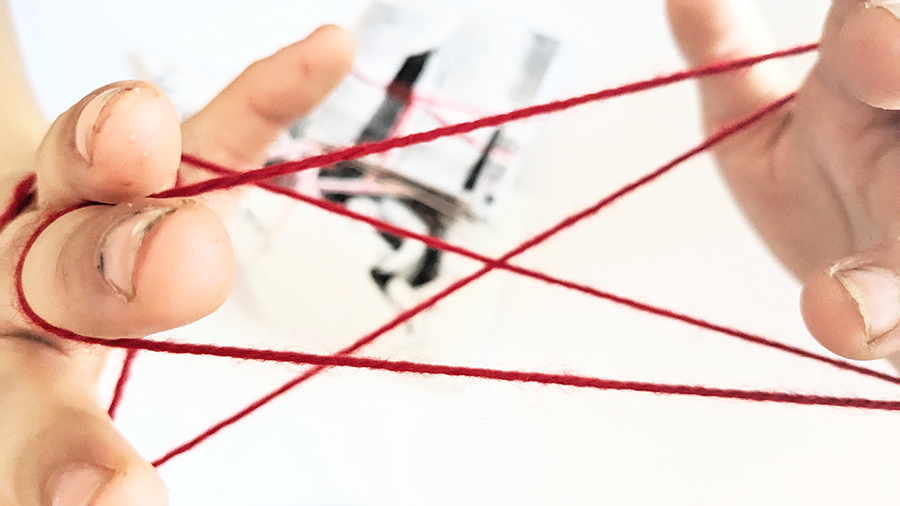
- a loop of red string long enough to play cat’s cradle
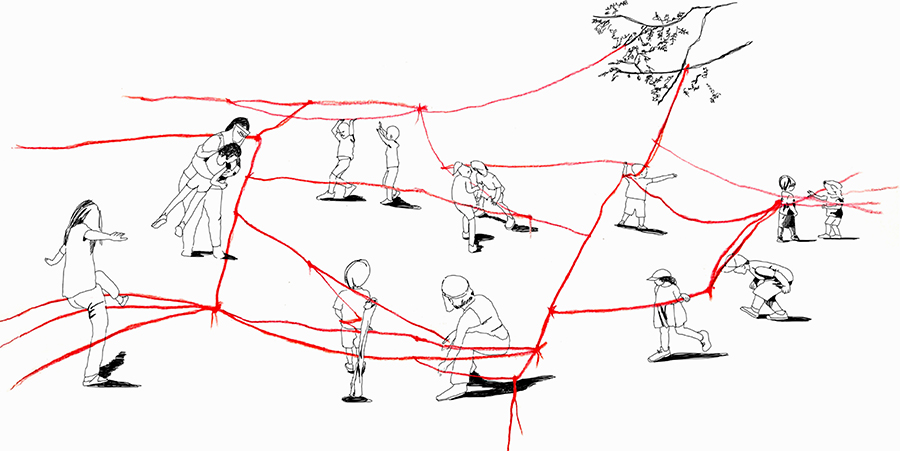
- two-sided paper zine storying a series of moments from the play/ground(ing) research project, when the elements of the playground space were connected by yarn stretched across fences, tree branches, rocks, plants, stormwater drain, bodies; unfolded, the page is intersected by a long cut
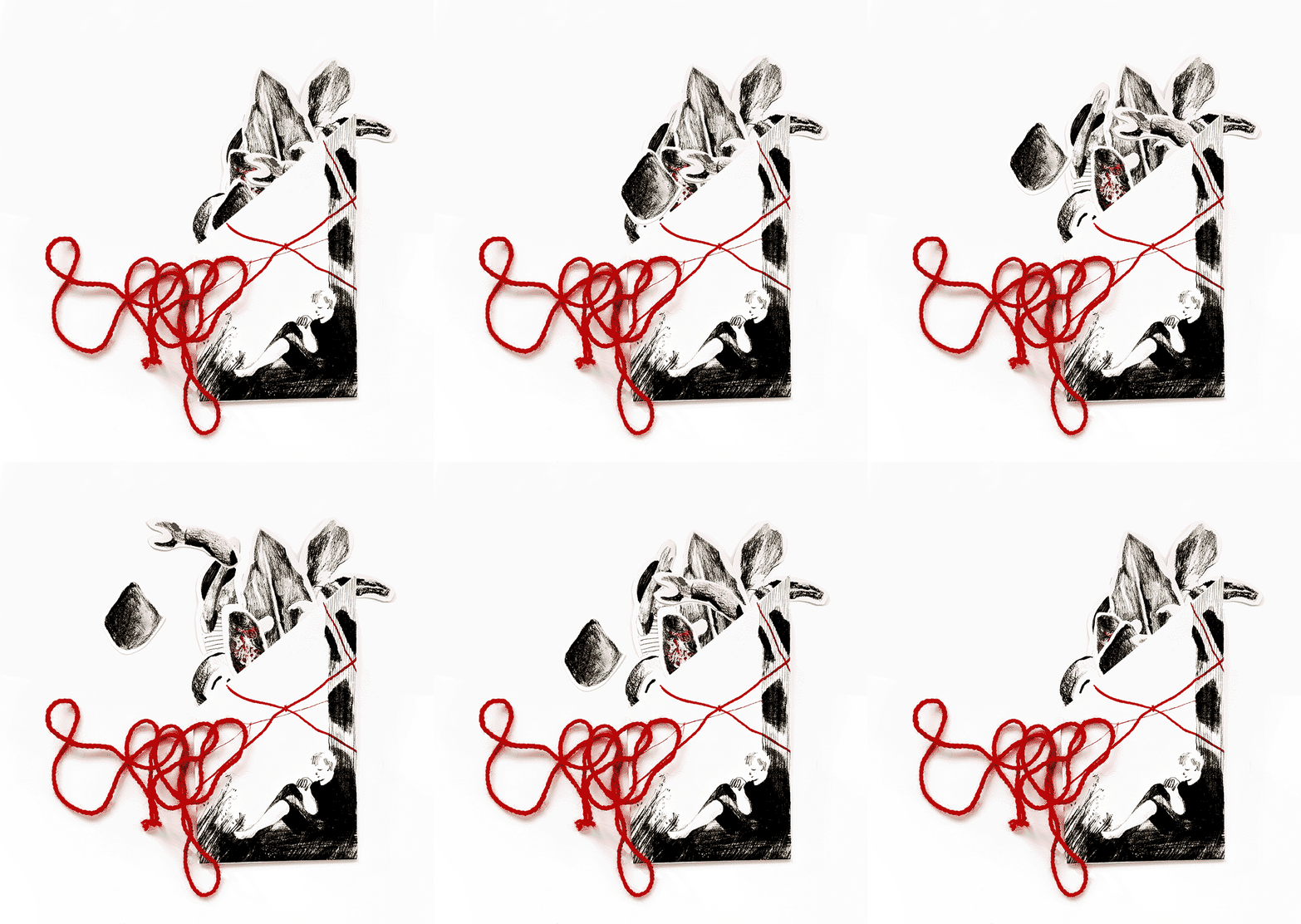
- cardboard cutout figures of children, rocks, plants, waste pieces and warning siren tower.
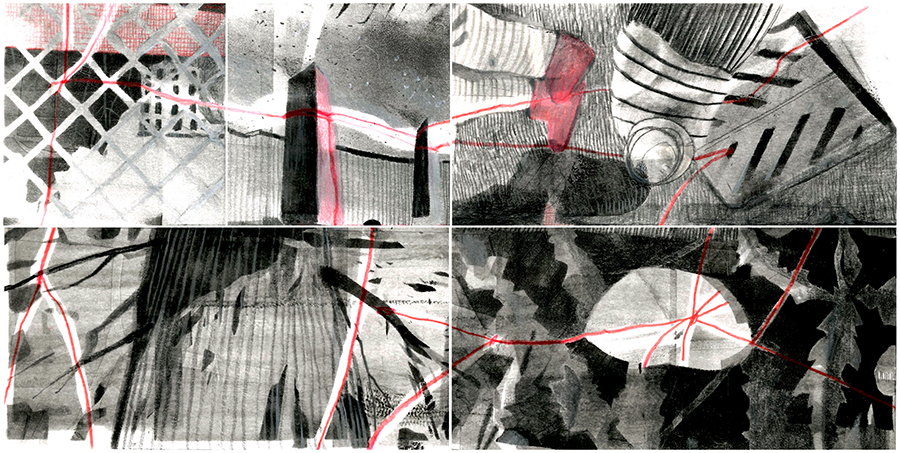
My hope for the game is to be worked as “an apparatus that is attentive to the nature of specific [play/ground(ing)] entanglements” (Barad, 2007, p. 233). Here, the game doesn’t move towards a resolution/ solution, rather it persists as “the inescapable entanglement” (Barad, 2007, p. 3).
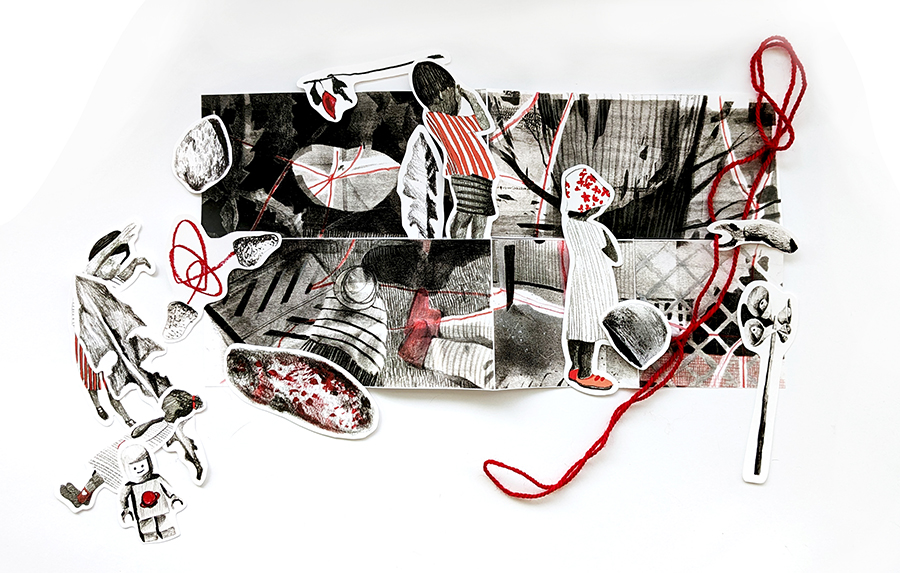
When the zine is unfolded, one side of it is tightly-packed with darkly drawings, while the other is light, containing a few line drawings suspended over a nearly “blank” space. Similarly, the figures have been drawn on one side and left “blank” on the other, the pieces of paper thus holding together both children made knowable by body-politic and the incompleteness of representation of “[b]odies [that] exceed our knowledge of them” (Manning, 2007, p. 143). The white emptiness, too, is meant as invitation to infinite drawing possibilities.
What will become in the absence of game-maker?
 TZG Portfolio